Your 12-Month-Old: First Steps, and Using Things the Way They Are Meant
By the Growbaby team · Published Aug 4, 2026
Written against AAP, CDC and WHO guidance. How we write these guides
At a glance
- Using a brush on hair or a cup to drink shows your baby has learned what things are for.
- Simple turn-taking games are now genuinely two-way.
- Standing unsupported usually comes before walking unsupported.
- First steps commonly land around now, with a wide normal range either side.
- Sleep is typically 12 to 16 hours per 24, and the second nap usually holds for a while yet.
The first birthday gets treated as a finish line and it is mostly a bookmark. The genuinely new thing this month is functional play: your baby brushes their hair with a brush rather than banging it, holds a cup to their mouth, puts a phone to their ear. They have worked out what objects are for, which is a different kind of knowing than what objects do.
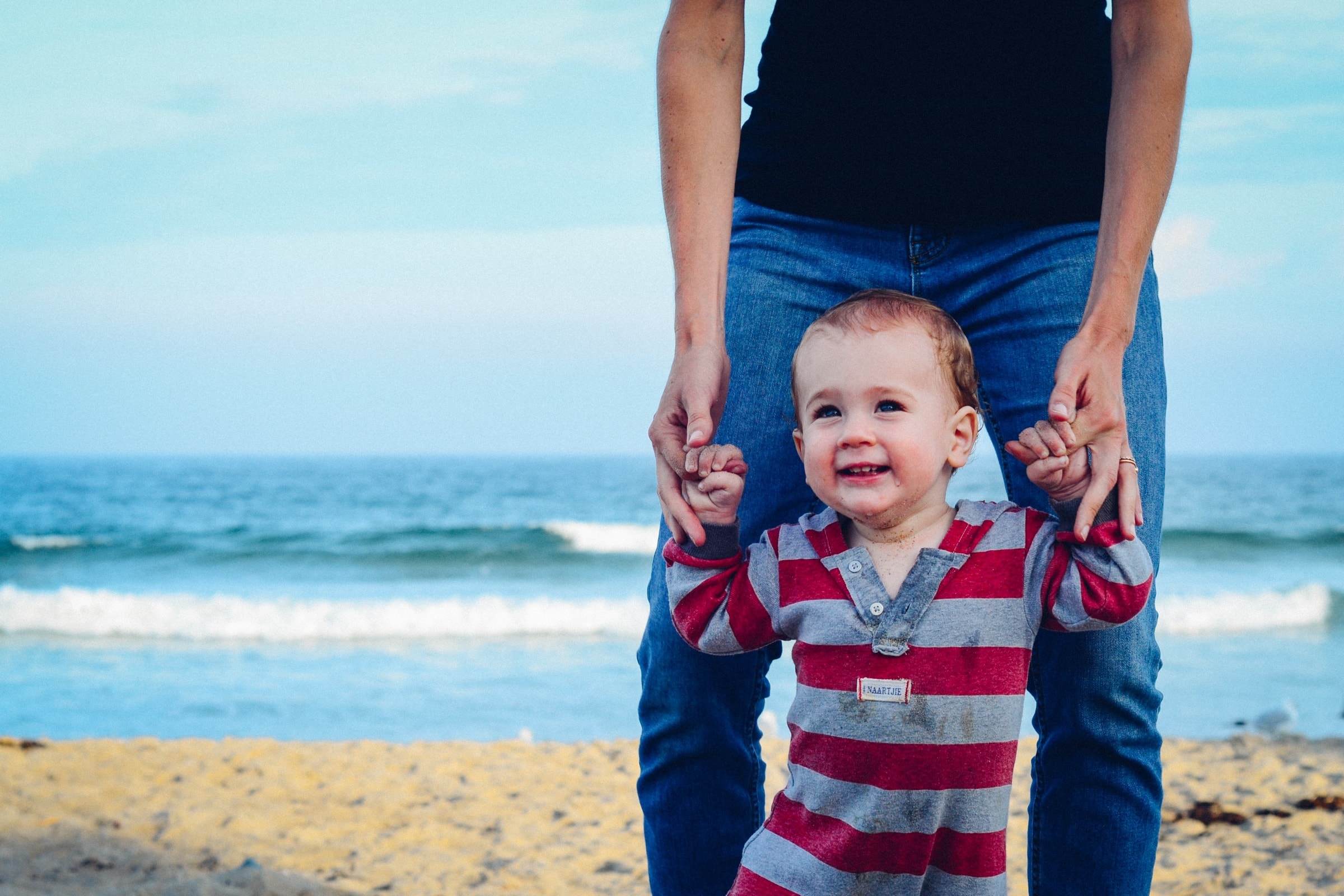
First steps often arrive around now. If they do not, that is still firmly within normal; the usual guidance is to check in if a baby is not walking at all by about 18 months.
What is new this month
Functional play is the genuinely new thing. Your baby brushes their hair with a brush rather than banging it, holds a cup to their mouth, puts a phone to their ear. Knowing what an object is FOR is a different kind of knowing than what it does, and it only comes from watching you.
First steps often land around now, and the normal range either side is wide enough that a baby walking at nine months and one walking at seventeen are both unremarkable. The first birthday is a bookmark rather than a finish line.
What the CDC checklist says at 1 year
One year is a CDC checklist age. These are things most children, meaning 75% or more, can do by now.
- Social: plays games with you, like pat-a-cake
- Communication: waves bye-bye; calls a parent mama or dada or another special name; understands no, pausing briefly or stopping when you say it
- Thinking: puts something in a container, like a block in a cup; looks for things they see you hide
- Movement: pulls up to stand, walks holding on to furniture, drinks from a cup without a lid as you hold it, picks things up between thumb and pointer finger
Walking is not on the one-year list
This is the single most useful thing a parent of a twelve-month-old can know. The CDC's movement milestones at one year are pulling up to stand and walking while holding on to furniture, which is cruising. Independent walking is not here at all.
It appears twice, later, and split in two: taking a few steps alone by fifteen months, and walking without holding on to anyone or anything by eighteen. So a one-year-old who is not walking is not behind, and the first birthday is not the date to measure against. Our walking guide covers both checkpoints and what to do at each.
The same goes for words. Calling a parent mama or dada is on this list; a vocabulary is not. Trying to say one or two other words appears at fifteen months, and three or more at eighteen.
What actually changes at the first birthday
Two practical things do change on the date, and neither is developmental. Cow's milk becomes appropriate: whole milk, about 16 oz or two cups a day, where the recommendation before twelve months was none. And juice, which infants under one should not have at all, becomes permissible in small amounts later in toddlerhood rather than now.
Our guide to what babies can drink by age covers both, with the amounts from the joint consensus of the AAP, the American Heart Association, the Academy of Nutrition and Dietetics and the American Academy of Pediatric Dentistry.
When to raise something
The twelve-month checkup is the place. Worth mentioning: not pulling up to stand, not cruising along furniture, no gestures at all such as waving or pointing, no babbling with consonants, or not using mama or dada for a specific person.
Not walking is not on that list, and neither is not crawling. A skill that has gone away is, and it is the one worth a call rather than waiting for the visit.
Week by week, in the app
One thing to notice and one thing to try, for every week of the first three years. Here is what this month covers. The app works out which week your child is in from their birth date and brings each one to you on the day.
- Week 49Your baby is Using Objects for Their Intended Purpose
- Week 50Your baby is Playing Simple Games
- Week 51Your baby is Standing Independently
- Week 52Your baby Takes Their First Steps
Read next
- When Do Babies Start Crawling?Most babies start moving across the floor somewhere between 6 and 10 months.
- When Can Babies Start Solid Foods?The AAP recommends only breast milk for approximately 6 months, then foods alongside continued breastfeeding.
- When Do Babies Sit Up?Sitting is two separate skills on the CDC's list, three months apart.

This week, for your baby
Growbaby works out which week your baby is in from their birth date and brings that week's activity to you on the day, so you are not looking up where you are. Plus adaptive soothing for the nights and Growy for the questions in between.
Frequently asked questions
Commonly around twelve months, with a wide normal range either side. Standing unsupported usually comes before walking unsupported, so a child who can stand still in the middle of the room is close.
Typically 12 to 16 hours per 24, naps included. The second nap usually holds for a while yet at this age, and dropping it early tends to produce an overtired evening rather than a better night.
Brushing hair with a brush or drinking from a cup shows your child has learned what things are for, not just what they feel like. It is a step up from exploring an object to knowing its purpose.
This guide is for general informational purposes only. Growbaby is not a medical device and does not provide medical advice, diagnosis or treatment. Every baby develops at their own pace; for any question or concern about your baby's health or development, always consult your pediatrician or another qualified healthcare provider.